
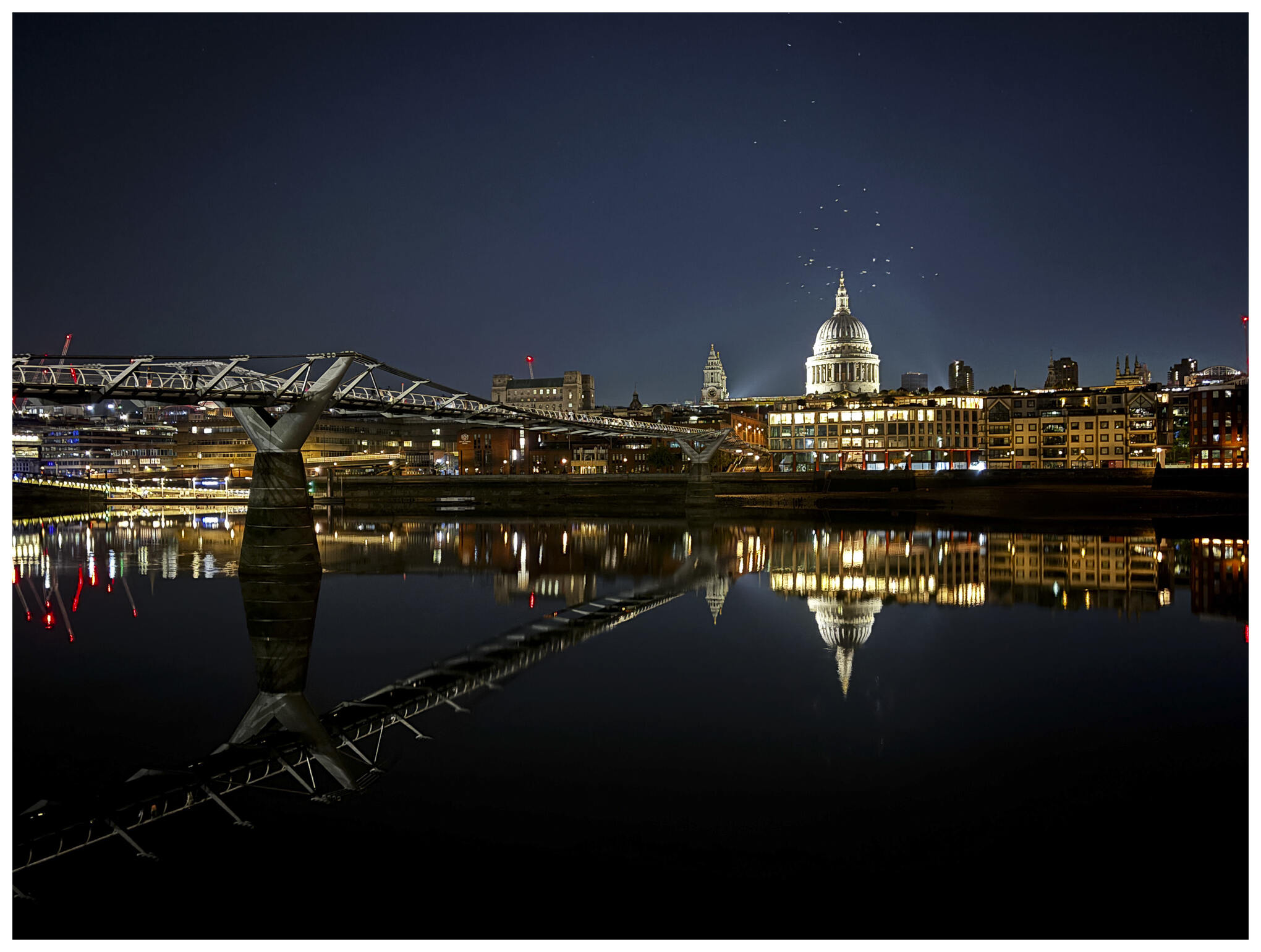
After a 20-hour flight delay, we made it to London a day later than we had planned, but we arrived at 7am rather than in the evening as we’d originally scheduled. Even though we had to pay for a night at Sea Containers (our hotel, not a shipping container) that we did not use, we were glad to have the room available right away. Since we miraculously had some energy left, we set out to discover the South Bank, Westminster, and St. James’s Park. No plans, just wandered.
The trip to London was the second time we used a new trip-planning site I developed to help us keep track of what we want to do and see. Before we traveled, we saved places that sounded interesting on a map cross referenced by neighborhoods and categories — typically historical sites, museums, galleries, shops, bookstores, restaurants, and cocktail bars — so that when we were walking through a neighborhood, we could pull up our map and see what happened to be nearby. We really enjoy spending days that way — unless there is someplace that requires a ticket or advance reservation.
We passed the London Eye (the big, very slow, Ferris wheel), Westminster Abbey, and the Palace of Westminster. We wrapped up the evening with a lovely dinner at Fallow.
We saw a version of the London rickshaw I hadn’t seen before: fur-trimmed pedicabs. They come in bright colors, some with lights, and cluster in tourist-heavy areas. Looked fun, but not fun enough. Debbie’s curious how often they get washed.

South Bank & Westminster
We stayed in South Bank to be close to the Tate Modern, Southbank Centre, and especially the Globe Theatre, since the show we saw — A Midsummer Night’s Dream — didn’t let out until 2:30am. A midnight show seemed like a great idea at the time I booked it.
The walking and people-watching were great in South Bank. A riverside path called the Queen’s Walk runs from Tower Bridge to the Golden Jubilee Bridges. Along the way: HMS Belfast, the Clink, Shakespeare’s Globe, the National Theatre, the Tate, an underground skate park, and always a few buskers and tons of food trucks — where Debbie found the best veggie burger in the world. Congratulations!
Westminster
Westminster is where a lot of the tourists are, and also where protests and demonstrations happen since Parliament is there. We managed to walk right into a demonstration full of Iranian and Israeli flags and photos of the Shah’s son. A very interesting group. We even saw a scuffle.


After walking through Trafalgar Square, we wandered into St. James’s Park, which has a diverse bird population, including pelicans (brought there in the 17th century), mute swans, various ducks and geese and green parrots. Thanks for the help, Merlin.


Neighborhoods
We explored a bunch of other neighborhoods including Seven Dials and Covent Gardens — the markets had interesting shops and rotating performers in the square. If there’s a crowd, we’ll find it. The performers were entertaining, if a bit long-winded, taking forever to get to whatever it was they were actually doing, while reminding everyone that they were there for the money.


Victoria & Albert Museum, Saatchi Gallery, Hayward Gallery, and the Tate Modern
Initially, our visit to London was motivated by the opening of Anish Kapoor’s most recent show at the Hayward Gallery. I’ve always liked his work. I find his sculptural pieces theatrical and experiential. His public sculpture Cloud Gate (aka the Bean) in Chicago’s Millennium Park is a great example of how public sculpture can really animate a space and bring people together.
The Victoria & Albert Museum is absolutely huge — to the point that there are suggested trails you can take. We didn’t take the “hikes,” but wandered through the galleries that interested us, especially the Japan and China galleries. The V&A’s focus for so long has been on really old and historic stuff, so it was nice to see contemporary crafts woven in alongside the artifacts. One of my favorite galleries is the Cast Courts — everything is a replica, often plaster, made in the early 19th century. It’s visually arresting seeing seemingly rare and large artifacts crammed into two big galleries; everything seems just a little too big for the space, making it kind of awesome.
The Tate Modern had all the greatest hits of modern and contemporary art — nothing really inspiring. But the building was great Brutalism, and good people-watching.


Theatre
We had booked the midnight show at the Globe Theatre, a renovated replica of the Shakespeare’s original theater and located pretty close to that original site on the South Bank of the Thames. We figured it would be more fun than the more respectable 7:00pm show. Afternoon naps were required. Chaos — it was packed. After getting a beer and finding our balcony seats, we looked down at the floor, with a standing-room-only crowd. They stood for three hours. Damn kids! I don’t do that anymore.
We also went to see what a very popular production at the National Theatre: War Horse. Apparently it started in London, has been traveling around for a couple of decades, and has recently returned to the National Theatre again. The theater is huge and seats over a thousand people — and it was full. The show: puppet horses, an elaborate production, a very sappy story, and kind of wooden acting. So, not our best choice, but it was fun seeing how many people loved the show and came out to see it. Not a dry eye in the house — except maybe our four.


Victoria Embankment Gardens, Regent’s Park
We were very impressed with the amount and scale of green space in London. The parks are large, clean, and generally have water elements like fountains, ponds, and lakes. It was summer, and while not quite a heat wave like the one that came right after we left, tons of people were out enjoying the parks. We went to Regent’s Park on a weekend — lots of locals just hanging out, having picnics, and walking.


I picked up a book on London at the Tate. In the beginning, it characterizes London as “the monster city.” It grew organically since the Middle Ages and transformed into a global city between 1873 and 1900. During that time, it consumed the small outer boroughs and villages that make it up today. It’s a city that is always changing. This time, it reminded me of Beijing in the 1990s, when Beijing was building so much it had the highest number of construction cranes in the world. London doesn’t come close, but there sure were a lot of cranes. Always building. Like Tokyo, it’s a juxtaposition of this and that.